MSMEs - Growth ARC
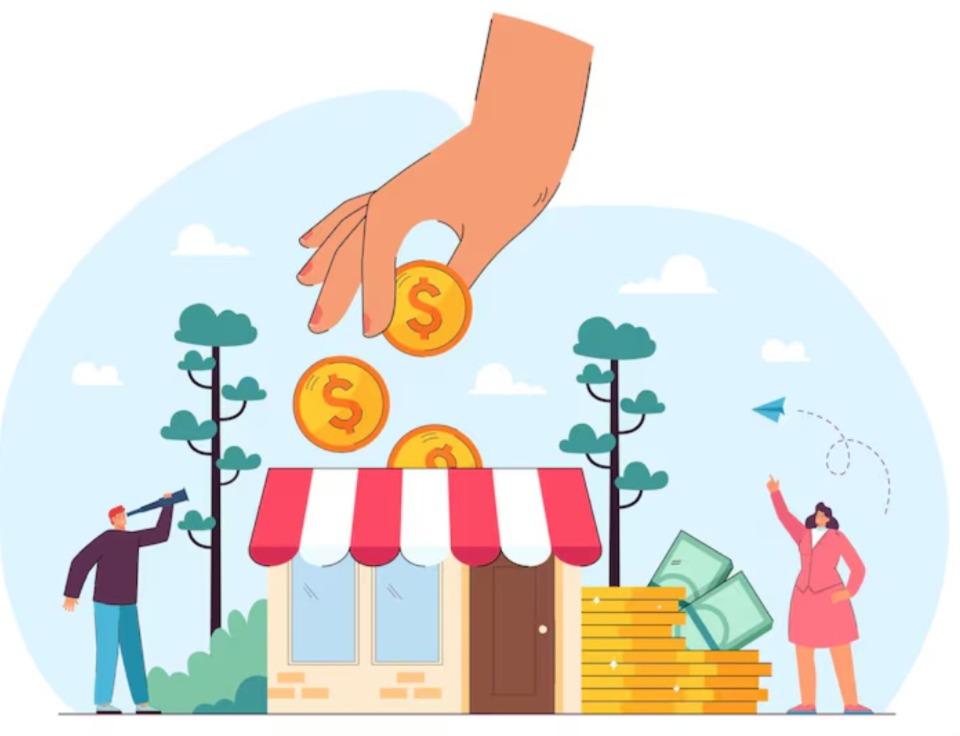
MSMEs – Growth Arc
What is MSME?
MSME stands for Micro, Small and Medium Enterprises. In words, MSMEs are small businesses that make things or provide services, but they do this on a smaller scale compared to big companies.
Think about the businesses you see around you every day. For example, a small workshop where things are made, a bakery, a shop where clothes are made, a store where mobile phones are fixed or a small company that provides computer services. These kinds of businesses usually do not have a lot of money to invest, they do not have many employees, and they are not very big, but they are very important for the economy. Most of these businesses are called MSMEs.
The Government of India made the MSME category to help these businesses. Because these businesses often do not have much money like big companies the government and banks give them special help, such as easier loans, money from the government and programs to support businesses.
MSMEs are divided into three types based on the size of the business.
Let’s understand this with an example.
Imagine a person who starts a workshop to make furniture with a few machines and a few workers. The investment is small and the business is just starting so it would be called Micro Enterprise.
If the business grows, buys machines, hires more workers and starts selling furniture in many cities it might become a Small Enterprise.
If it grows even bigger and sells furniture all over the country it may eventually become a Medium Enterprise.
MSMEs are very important for India because they create jobs and help economies. Many people start their careers and earn money through these small businesses. In fact, many people in India work in MSMEs.
Another important reason MSMEs matter is that they help people start their businesses. Anyone with an idea and the will to work hard can start a small business. Over time that small business can be a big company.
Because small businesses sometimes struggle to get money to grow or pay their expenses banks give MSME loans. These loans help business owners buy machines, hire workers, make things or pay their daily expenses.
To make loans easier to get banks often work with companies that help small business owners apply for loans and understand their options.
In terms MSMEs are the backbone of the economy. They may start small. They have the power to grow, create jobs and help the country develop.
Evolution of MSME Loans in India: A Timeline
The development of MSME loans in India shows the country’s effort to help businesses and promote economic growth. Over the years India has introduced policies, institutions and financial schemes to ensure that Micro, Small and Medium Enterprises (MSMEs) have access to money. These initiatives changed the lending system. From bank-based financing to modern systems that include non-banking lenders, new technology lenders and Business Correspondents such as Aashiyana Financiers.
Let’s have a look at the timeline explaining how MSME financing evolved in India.
1948–1960: Foundation of Small-Scale Industry Support
After India became independent it was clear that small industries could play a role in creating jobs and helping the economy. In 1948 the Industrial Policy Resolution highlighted the importance of small-scale industries in making local economies stronger.
During the 1950s and 1960s the government started making institutions to support these industries financially and technically. Some important things that happened included:
- 1955 – The State Bank of India (SBI) was made to strengthen financing for industries.
- 1956 – The Industrial Policy Resolution again emphasized the importance of industries.
- Small Industries Development Organizations (SIDO) were made to provide financial guidance.
At this time financing mainly came from banks and cooperative institutions but it was hard for businesses to get credit.
1970–1980: Priority Sector Lending for Small Businesses
In the 1970s the government introduced Priority Sector Lending (PSL) rules. Under these rules banks had to give a part of their loans to sectors that were important for development including small-scale industries.
Important things that happened during this time included:
- Banks were told to give a percentage of their loans to small industries.
- Regional rural banks (RRBs) were expanded to improve access in rural areas.
- Government-backed financial assistance programs grew.
This period marked the big attempt to ensure that small businesses could get credit in a systematic way.
1990–2000: Liberalization and Expansion of Financial Support
India’s changes in 1991 brought big changes to the financial sector. As the economy opened small businesses needed access to money to compete in a more dynamic market.
Major things that happened during this time included:
- Financial institutions that focused on businesses were expanded.
- The Small Industries Development Bank of India (SIDBI) was strengthened to provide refinancing and direct lending to MSMEs.
- Many credit schemes were introduced to improve financing for enterprises.
SIDBI became an institution in MSME financing supporting both banks and non-bank lenders in giving loans to small businesses.
2000–2006: Growth of Structured MSME Lending
In the 2000s India recognized the need to formally organize the small business sector. Financial institutions started designing loan products for small enterprises, such as loans for working capital and equipment financing.
Some important things that happened included:
- The Credit Guarantee Fund Trust for Micro and Small Enterprises (CGTMSE) was introduced in 2000, which allowed banks to give collateral- loans backed by government guarantees.
- Non-banking lenders started giving loans that were faster and more flexible than banks.
This period significantly improved credit accessibility for entrepreneurs.
2006: MSME Development Act
A major milestone came in 2006 with the MSME Development Act (MSMED Act). This law officially introduced the term Micro, Medium Enterprises (MSMEs) and replaced the earlier Small-Scale Industry (SSI) classification.
Key impacts of the MSMED Act included:
- Classification of micro, small and medium enterprises.
- A stronger policy framework for MSME development.
- Better access to government schemes.
The act also encouraged banks and financial institutions to expand lending programs specifically designed for MSMEs.
2010–2015: Digital Banking and Faster Loan Access
As India’s digital infrastructure improved the lending system started using processes and digital verification systems. This made MSME loans more accessible and faster to process.
Key things that happened during this time included:
- Banks and non-bank lenders introduced loan application systems.
- Non-banking lenders expanded their lending to MSMEs offering approvals and more flexible criteria.
- Alternative credit assessment methods, such as transaction history and business cash flow started being used more.
These innovations helped reduce the barriers small businesses faced when applying for loans
2015–2020: Government Schemes and Financial Inclusion
During this period the government launched major initiatives to improve financial access for small businesses.
- Pradhan Mantri Mudra Yojana (PMMY),2015 – Provided loans up to ₹10 lakh to micro and small businesses under three categories: Shishu, Kishor and Tarun.
- Stand-Up India Scheme, 2016 – Promoted entrepreneurship among women and marginalized communities by facilitating bank loans.
- Udyam Registration – Simplified MSME registration and improved access to government benefits and loans. These initiatives significantly expanded the MSME lending ecosystem across India.
2020: Revised MSME Definition and COVID Support
In 2020 the government introduced a definition for MSMEs under the Atmanirbhar Bharat initiative. The classification was updated to include both investment and annual turnover, allowing businesses to grow without losing their MSME status
Key measures introduced during this time included:
- Emergency Credit Line Guarantee Scheme (ECLGS) to support businesses affected by the COVID-19 pandemic.
- Expansion of collateral- loan guarantees.
- Simplified MSME registration, through the Udyam Portal.
These reforms strengthened credit availability during an economic period
2020–Present: Rise of NBFCs, Fintech and BC Partnerships
In the few years the way small and medium businesses get loans in India has changed a lot because of new technology and new ways of lending.
Important things that are happening now include:
- NBFCs are lending increasingly to small and medium businesses.
- Now people can get loans approved digitally. Their credit scores are decided by computers.
- Business Correspondents are being used to reach small business owners in small towns and villages.
These Business Correspondents act as middlemen between the people who lend money and the people who borrow money helping small businesses navigate the process of getting a loan. Companies like Aashiyana Financiers work with NBFCs to help small businesses find loans and assist them with the paperwork and application process.
This new way of lending is making it easier for people to get loans from those who could not get loans from banks before.
Present and Future of MSME Lending in India
Now small and medium businesses can get loans from different places including:
- Government banks
- Private banks
- NBFCs
- Fintech companies that lend money
- BC partners like Aashiyana Financiers
With digital verification computers deciding who gets a loan and government schemes it is now easier and faster for small businesses to get loans.
Looking ahead the MSME lending sector is going to grow a lot as India keeps supporting businesses, digital finance and small businesses. Working together financial institutions and local helpers will make sure every person who wants to start a business can get the money they need to make their business grow. 🚀